MARK 5320: Advanced Marketing Fundamentals
Chapter 1: What is Marketing?
Introduction
This module defines and discusses the four components of marketing, identifies the various institutions and entities that engage in marketing activities, and emphasizes the importance of marketing in society. Lastly, the module outlines the marketing plan and introduces topics as they relate to the marketing plan structure.
Learning Objectives
- Define marketing and outline its components.
- Describe how the various institutions and entities that engage in marketing use marketing to deliver value.
- Explain the role marketing plays in individual firms and society as a whole.
- Understand and outline the elements of a marketing plan as a planning process.
Defining Marketing
What Is Marketing?
The American Marketing Association defines marketing as the activity, set of institutions, and processes for creating, communicating, delivering, and exchanging offerings that have value for customers, clients, partners, and society at large .
For me the key word in the definition is exchange - marketing is about creating the opportunity for exchanges to take place.
Four Components of Marketing
- Creating – creating/collaborating with suppliers and/or customers offerings that have value.
- Communicating – describing those offerings to customers as well as learning from customers.
- Delivering – getting those offerings to customers in a way that optimizes value.
- Exchanging – trading value for those offerings.
Value
Value consists of the tangible and intangible benefits associated with purchasing a product or service. A company attempts to offer a product or service that has value, but ultimately it is the buyer that decides the value of the offering. If the buyer determines that a product or service has too high a price tag or is too much of a hassle to purchase, then the company has failed to create value in the eyes of the buyer.
Value = Benefits received – (Price + Hassle)
Evolution of Marketing Orientation:
Production Orientation Late 1800s thru 1920s
Business concerned itself primarily with production, manufacturing, and efficiency issues. This view point was encapsulated in Says Law which states Supply creates its own demand (from the French economist Jean-Baptiste Say). To put it another way, if a product is made, somebody will want to buy it. The reason for the predominance of this orientation is there was a shortage of manufactured goods (relative to demand) during this period so goods sold easily. This is what is referred to as "if you build it they will come" view. It is effective when demand is greater than supply. The implications of this orientation are:product lines were narrow, pricing was based on the costs of production and distribution, research was limited to technical product research, packaging was designed primarily to protect the product, and promotion and advertising was minimal
Sales Orientation 1920s thru Post World War II
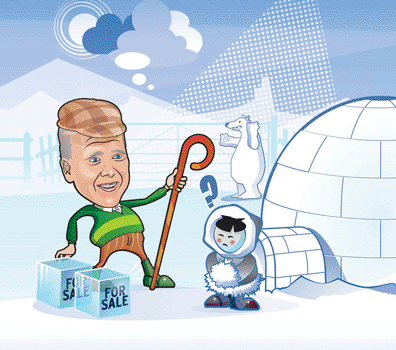 During WWII world industry geared up for accelerated wartime production. When the war was over this stimulated industrial machine turned to producing consumer products. By the mid-50s supply was starting to out-pace demand in many industries. Businesses had to concentrate on ways of selling their products. Numerous sales techniques such as closing, probing, and qualifying were all developed during this period and the sales department had an exalted position in a company's organizational structure. Other promotional techniques like advertising, and sales promotions were starting to be taken seriously. Packaging and labeling were used for promotional purposes more than protective purposes. Pricing was usually based on comparisons with competitors (called competitor indexing). This orientation is best described by the expression "selling ice to Eskimos."
Market Orientation 1950s to Present
A marketing oriented firm (also called the marketing concept, or consumer focus) is one that allows the wants and needs of customers and potential customers to drive all the firm's strategic decisions. The firm's corporate culture is systematically committed to creating customer value. In order to determine customer wants, the company usually needs to conduct marketing research. The marketer expects that this process, if done correctly, will provide the company with a sustainable competitive advantage.This consumer focus can been seen as a process that involves three steps. First customer want are researched, then the information is disseminated throughout the firm and products are developed, then finally customer satisfaction is monitored and adjustments made if necessary.
Communicating Offerings
Communicating is describing the offering and its value to potential and current customers, as well as learning from customers what it is they want and like. Companies develop marketing campaigns that target the different types of customers they may have. They may educate potential customers on the features and benefits or encourage the purchase of add-on services or accessories by current customers. Today companies use the Internet as a tool for creating meaningful interactive dialogue between companies and their customers. Companies also still use traditional media to advertise their offerings; such as television and radio commercials, newspaper and magazine ads, and billboards. Companies also may pursue product placement in movies and free press coverage of sponsored or hosted events.
Absolute
Alternative Advertising

Delivering Offerings
Marketing can't just promise value, it also has to deliver value. Delivering an offering that has value includes making sure consumers know how to use the offering and how to get continued support if needed. A company delivers value through its supply chain; those organizations and individuals responsible for getting the offering from the manufacturer to the user. The size and makeup of supply chains vary greatly. Some manufacturers sell directly to large retailers, while others sell to wholesalers who then distribute offerings to many smaller retailers. Also, some manufacturers sell their products directly to their customers, bypassing all supply chain organizations and individuals.
Exchanging Offerings
- A company must exchange their offerings with the customer for something of value.
- Customers must perceive value in the product or service in order for them to justify giving up something they have to obtain the offering.
- The "something" customers give up may be money, time, energy, information or knowledge. Examples of transactions that do not involve money include using frequent flyer miles, completing an online survey to earn bonus points toward a future purchase, and volunteering your time in exchange for a free gift.
- The initial exchange of offerings doesn't end the relationship between the customer and company. Follow-up support, subscriptions for access to product/service plans, and warranty services are just a few of the continuing exchanges.
- An increasing awareness of the need to reduce landfill waste has led many companies to provide disposal services for their products.
Who Does Marketing?
For-Profit Companies
Companies create products and services with the idea that the offerings will meet customers' needs, then communicate, deliver and exchange their offerings for something of value from their customers. Companies can be defined by the nature of their customers. A B2C (Business to Consumer) firm sells products or services to be used by consumers, while a B2B (Business to Business) firm sells products or services to be used by other businesses. Companies can also be classified by the functions they fulfill in the marketing process. A large manufacturer, such as Proctor & Gamble, may market its products directly to large retailers like Walmart. P&G may also sell its products to wholesalers, who then market them to smaller chain stores. P&G and the wholesalers may also provide retailers with marketing materials such as in-store displays, advertising templates; the retailer is then responsible for facilitating the exchange. Generally, everyone included in the supply chain for a product engages in the marketing of that product.
Non-Profit Organizations
Non-profit marketing is done by private organizations, churches, institutions, and government agencies.
These groups may engage in social marketing to:
- Promote awareness about social issues such as heart disease in the case of the American Heart Association.
- encourage involvement in social causes such as recycling in the case of the Environmental Protection Agency
- Solicit membership as in the case of the U.S. Army.
Individuals
Individuals market themselves when seeking jobs, promotions, public office, and preferential treatment.To be considered for a job, a person must submit a resume and letter of interest, as well as attend an interview. Every contact with a potential employer is an opportunity to market oneself.
Why Study Marketing?
Marketing Enables Profitable Transactions to Occur
The belief in the adage, "build it and they will come" has, unfortunately, contributed to the failure of many businesses. Products and services don't sell themselves.
Companies must engage in marketing activities in order to facilitate a profitable transaction between themselves and the customer. The definition of a profitable transaction doesn't necessarily involve the exchange of money for a product or service. Non-profit organizations that promote a social cause may determine that a profitable transaction has occurred if there is increased involvement or awareness of the social issue in question. Likewise, individuals would claim that securing the desired job demonstrates that a profitable transaction has taken place. Marketing activities benefit society as a whole by allowing people to: make wise purchasing decisions,educate themselves on important social issues,obtain desired careers.
Marketing Delivers Value
Reciprocity is the buzzword in a free-market economy. In order for a company to make a profit, it must offer something of value to its customers and get something of value in return.
Marketing activities that develop and promote long-term customer relationships translate into offerings that have value for both the company and the consumer.
Marketing Benefits Society
Marketing benefits society by providing a vehicle for free trade. Successful marketing leads to more exchanges of offerings. Companies that sell more products and services create more jobs. With successful marketing, come more choices in the marketplace. Informed consumers demand more value for their money and have the luxury of choosing from a vast array of products and services. Smarter consumers and more choices lead to a better quality of life.
Marketing Costs Money
In some industries such as soft drinks, marketing expenses make up about one-third of the product's price. Costs to consumers are often justified by the idea that informed consumers receive greater value in purchasing decisions from marketing efforts.
Everything Starts with Customers
Many businesses get their start by seeking to fill a specific need the consumer has. Early stage marketing is done often by the founders of a company when they develop an idea for a product or service that will meet a need for their customers. Often these early voyages into marketing are a result of the founders having experienced the need for the offering themselves. Not all companies consider their customers in the beginning stages of product development. Some believe that if they provide a quality product or service, there will be automatically be a demand for it. This goes back to the adage, "Build it and they will come." It is a risky endeavor in today's complex and competitive marketplace.
The Marketing Plan
- Identify customer needs
- Evaluate whether those needs can be met in some way that allows for profitable exchanges to occur.
- Develop a mission statement, strategy, and organization with those needs as the centerpiece.
- Create offerings that are the result of meticulous market research
- Form operations and supply chains that advance the successful delivery of those offerings.
- Pursue promotional campaigns that lead to continued successful exchanges between company and customer.
- Engage in meaningful communication with customers on a regular basis.
Marketing Plan Template