MARK 5320: Advanced Marketing Fundamentals
Chapter 3: Consumer Behavior
Introduction
Consumer behavior involves the psychological processes that consumers go through in recognizing needs, finding ways to solve these needs, making purchase decisions (e.g., whether or not to purchase a product and, if so, which brand and where), interpret information, make plans, and implement these plans (e.g., by engaging in comparison shopping or actually purchasing a product).
Learning Objecitves
- Understand the stages of the buying process and distinguish between low-involvement buying decisions and high-involvement buying decisions.
- Describe the situational factors that affect what consumers buy and when and explain what marketing professionals can do to make situational factors work to their advantage.
- Explain how a person's self-concept and ideal self affects what he or she buys; describe how companies market products to people based on their genders, life stages, and ages; and explain how looking at the lifestyles of consumers helps companies understand and better connect with them.
- Explain how Maslow's Hierarchy of Needs works and outline the additional psychological factors that affect people's buying behavior.
- Explain why the culture, subcultures, social classes, and families consumers belong to affect their buying behavior; and describe what reference groups and opinion leaders are.
The Consumer's Decision-Making Proces
Consumer Behaviour Matters
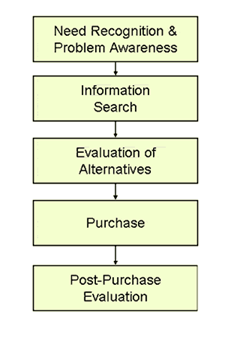 Stage 1: Need recognition - Consumers discover they have a need for a particular product either through their own experience with something lacking in their environment. Marketers often try to stimulate consumers into realizing they have a need for a product.
Stage 2: Search for Information - Sources of information may include family, friends, magazine reviews, and internet shopping and review sites.
Stage 3: Product Evaluation - Consumers have a set of evaluative criteria that helps them in making a purchasing decision. Marketing professionals want to convince consumers that their products meet those evaluative criteria.
Stage 4: Product Choice and Purchase - Consumers not only decide what product to buy, but how, when and where to buy it.
Stage 5: Post-Purchase Use and Evaluation - Consumers not pleased with their purchases experience post-purchase dissonance or "buyer's remorse." Companies try to prevent buyer's remorse through warranties, money back guarantees, follow-up support, etc. because they want repeat customers.
Stage 6: Disposal of the Product - Often how to dispose of the product after it has served its purpose influences a consumer's buying behavior. More companies recognize that being environmentally conscious sells products. However, other companies engage in planned obsolescence in an effort to improve sales.
Low-Involvement versus High-Involvement Buying Decisions
Consumers don't necessarily go through all the buying stages when they are considering purchasing a product. "Impulse buys" receive little planning or forethought and are usually but not always inexpensive purchases. Level of involvement in the purchasing decision means how personally interested you are in consuming a product. A low involvement product is generally inexpensive and poses a low risk to the buyer. Consumers engage in routine response behavior when they buy low-involvement products--that is, they make automatic purchase decisions based upon limited information or information they have gathered in the past. High involvement purchasing decisions carry a high risk to buyers if they fail, are complex, and /or have high price tags. High involvement products require extended problem solving where more time is spent comparing different offerings. High involvement products are more likely to cause buyers post-purchase dissonance if the buyers are unsure about the purchase. Consumers engage in limited problem solving when they already have some information about a good or service but search for somewhat more information. Low-involvement products pose little risk to the buyer because they are usually inexpensive products and are easy to purchase. High-involvement products pose a high risk because they are usually expensive, complicated, and/or time-consuming to purchase.
Lowandhigh
Situational Factors that Affect People's Buying Behavior
Situational factors such as physical factors, social factors, time factors, the reason for the buyer's purchase, and the buyer's mood are discussed.
The Consumer's Physical Situation
Atmospherics
Are physical factors that firms have control over and manipulate in order to try to influence consumer purchasing decisions.
Examples:
- Layout of grocery stores, with bread and milk at opposite ends so people will have to walk around entire store.
- Location of Starbucks, with a store every few miles in some areas and products available in grocery and convenience stores.
- Strategic fragrancing that keeps customers in the stores longer.
- Mirrors at elevators because when people are busy looking at themselves, they don't feel like they are waiting as long.
Music In Retail
The Consumer's Social Situation
Consumers feel social pressure to make certain purchases and companies use those social pressures to sell their products.
Examples:
- Buying Girl Scout cookies from your neighbor's child.
- Purchasing Avon or Tupperware while attending a friend's party.
- Eating at a sit-down restaurant while on a date, rather than fast food.
The Consumer's Time Situation
The time of day, the time of year and how much time consumers feel like they have to shop also affects what they buy. Researchers have even discovered whether someone is a "morning person" or "evening person" affects shopping patterns. "Time-starved" consumers expect and appreciate convenience. Companies worldwide are finding ways to accommodate them. Shoppers at 7-11 stores in Japan can pay their utility bills, local taxes, insurance/pension premiums, and even make photocopies. Some doctors provide drive-thru shots for patients in a hurry or the elderly who have trouble getting in and out of their automobiles. Amazon offers on-demand customer service with just a click of a button.
TIME
The Reason for the Consumer's Purchase
The purpose consumers are shopping for also affects the amount of time spent shopping. Consumers make emergency purchases usually based on sheer necessity; whereas, other purchases such as gifts and everyday products are made based on convenience.
The Consumer's Mood
Consumers' moods temporarily affect their spending patterns. Fears of an economic downturn in 2008 led to decrease in consumer spending. Companies try to get shoppers in the mood to spend by introducing sales, new lines of products, loyalty programs, etc. Time of day, the time of year, and how much time consumers feel like they have to shop also affects what they buy. People feeling depressed about the economy, leads to dramatic downturns in consumer spending. Holiday cheer usually leads to increases in consumer spending.
Personal Factors that Affect People's Buying Behavior
Personal factors such as personality, self-concept, gender, age, stage of life, and lifestyle are discussed as factors affecting people's buying behavior.
The Consumer's Personality
Personality describes a person's disposition as other people see it. The link between people's personalities and their buying behavior is somewhat unclear, but market researchers continue to study it.
Marketers study five personality traits in an effort to link the traits to buying behavior.
- Openness - how open you are to new experiences
- Conscientiousness - how diligent you are
- Extraversion - how outgoing or shy you are
- Agreeableness - how easy you are to get along with; and
- Neuroticism - how prone you are to negative mental states
Personality
TEST
The Consumer's Self-Concept
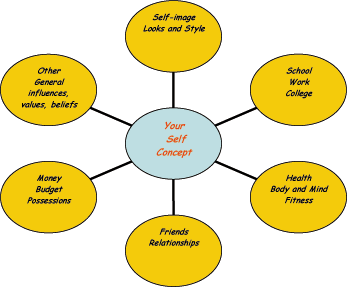
Marketers have had better luck linking people's self-concept to their buying behavior than their personalities. Self-concept is how you see yourself - be it positive or negative.
Ideal self is how you would like to see yourself. Marketers believe people buy products to enhance how they feel about themselves - to get themselves closer to their ideal selves.
The Consumer's Gender
Men and women shop differently online; men prefer sites with lots of pictures of products and women prefer the product shown in a lifestyle context or being used. Men have a different attitude toward shopping and want to get the products and get out usually. Women tend to want to browse and "shop til they drop".Women influence fully two-thirds of all household product purchases. Men buy three-quarters of all alcoholic beverages.Shopping patterns are evolving however. Forty-five percent of married men actually like shopping and consider it relaxing. New brands targeting men include face toners, body washes, hair salons, and diamond ads.
The Consumer's Age and Stage of Life
Companies understand that people buy different things based on their ages and life stages. Companies seek to create products that fit with their customer's age and stage of life.
Example: Ford has created an "Ageing Suit" for young employees to wear when they are designing automobiles. It mimics the restricted mobility and vision people experience as they grow older.
Example: Lisa Rudes Sandel, founder of Not Your Daughter's Jeans (NYDJ) created jeans for baby boomers with womanly bodies. Chronological age is actual age in years; cognitive age is how old one perceives him/her to be. Marketers have found that they must market their products based on cognitive age rather than chronological age.
The Consumer's Lifestyle
Companies spend significant time and money to better understand consumers and their lifestyles. Companies often have consumers fill out extensive questionnaires and submit to in-depth interviews in an effort to learn how consumers spend their time and what their priorities, values and general outlooks on the world are. Proctor and Gamble has gone so far as to follow women around for weeks as they shop, run errands, and socialize with one another. Other companies have paid people to keep a daily journal of their activities and routines. Psychographics combines the lifestyle traits of consumers and their personality styles with an analysis of their attitudes, activities, and values to determine groups of consumers with similar characteristics.
Lifestyle
Psychological Factors that Affect People's Buying Behavior
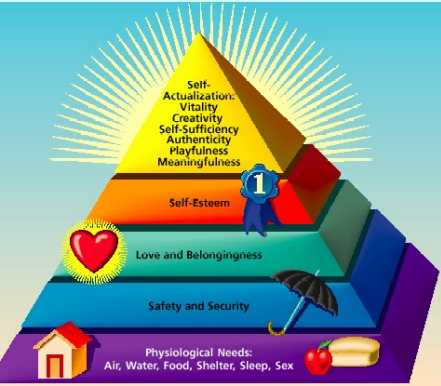
Motivation is the inward drive we have to get what we need.Abraham Maslow's Hierarchy of Needs outlines levels of needs that people experience. Lower level needs such as food, water, and shelter have to be fulfilled before higher level needs such as social, esteem and self-actualization. Knowing what needs consumers are trying to meet at any given time, help companies successfully market their products.Examples of marketing based on Maslow's theory: Hyundai ran an ad campaign that assured car buyers they could return their vehicles if they couldn't make the payments on them without damaging their credit. For a fee of about $500, First Mortgage Corp., a Texas-based bank, offered to make a homeowner's mortgage payment for six months if he or she got laid off.
The Consumer's Perception
Perception is how you interpret the world around you and make sense of it in your brain, via your different senses. Using different types of stimuli, marketing professionals try to make you more perceptive of their products whether you need them or not. Average consumer is exposed to about 3,000 advertisements a day. Selective perception - the process of filtering out information based on how relevant it is to you. Selective retention - forgetting information that contradicts a person's beliefs. Shock advertising has proven to sometimes be effective; subliminal advertising's effectiveness is somewhat more questionable. Exposure doesn't always translate into retention.
Perception
Learning
Learning is the process by which consumers change their behavior after they gain information or experience a product. To help consumers gain experience with their product, many companies offer free samples. Companies also promote repeat business by rewarding purchasers with free stuff.
Learning
Interesting videos on different types of learning. In marketing we are lucky -because people can learn by observation. So we can "teach" in commercials.
Consumers' Attitudes
Attitudes are the mental feelings people have about products, services, companies, ideas, issues, or institutions. Attitudes tend to be enduring and hard to change because they are based on people's values and beliefs. KFC tried to change consumer's attitudes about fried chicken being healthy until FTC told the company to stop Wendy's slogan, "way better than fast food" is trying to get consumers to think about its offerings as being better than fast food.
Societal Factors that Affect People's Buying Behavior
The effect culture, subcultures, social classes and families have on consumers' buying behavior is discussed. Culture is the shared beliefs, customs, behaviors, and attitudes that characterize a society. Culture prescribes how people should live and therefore has a huge effect on the things they purchase. Subculture is a group of people within a culture who are different from it, but who have something in common with one another - common interests, vocations or jobs, religions, ethnic backgrounds, sexual orientations, and so forth. Example: The American culture has several subcultures based on ethnicity, such as Hispanic, Asian, and African Americans. There are also subcultures based on people's interests, such as hip-hop, extreme sports, and gaming. Marketing based on ethnicity can be difficult because boundaries between ethnic groups is blurring. Subcultures based on people's interests are easier.
Interesting sub-culture Furries.
The Consumer's Social Class
A social class is a group of people who have the same social, economic, or educational status in society. To some degree, consumers in the same social class exhibit similar purchasing behavior. Upper-upper class - people with inherited wealth and aristocratic names (Rolls Royce), Lower-Upper Class - professionals such as CEOs, doctors, and lawyers (Mercedes), Upper-Middle Class - College graduates and managers (Lexus), Middle Class - Both white-collar and blue-collar workers (Toyota), Working Class - Blue-collar workers (Pontiac), Lower but not the lowest - People working but not on welfare (used vehicle), Lowest class - People on welfare (no vehicle). Makers of upscale brands want as many customers as possible, but must be careful when marketing to lower social classes. Creating more affordable products in an effort to gain more customers risks "cheapening" the brand in the eyes of the upper social classes. Johnny Walker successfully introduced affordable whiskeys by color-coded labels. Blue label Johnny Walker is the company's best product and is serial numbered and sold in a silk-lined box, accompanied by a certificate of authenticity.
Social class and food choices
Reference Groups and Opinion Leaders
Reference groups are groups a consumer identifies with and wants to join. Marketers capitalize on the consumer's desire to be like people in these groups.Opinion leaders are people with expertise in certain areas. Marketers want these people to endorse their products. Most market researchers consider a person's family to be one of the biggest determiners of buying behavior. Children have a great deal of influence over many household purchases. Companies marketing to children have been criticized for deliberately manipulating children to nag their parents for certain products.
KiddieConsumers
Changing Family
New opinion leaders