
The Consumer's Decision-Making Proces


Consumer Behaviour Matters
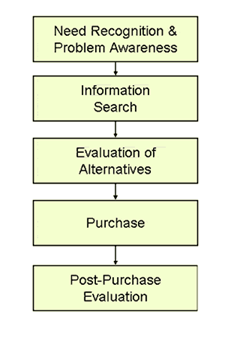 Stage 1: Need recognition - Consumers discover they have a need for a particular product either through their own experience with something lacking in their environment. Marketers often try to stimulate consumers into realizing they have a need for a product.
Stage 2: Search for Information - Sources of information may include family, friends, magazine reviews, and internet shopping and review sites.
Stage 3: Product Evaluation - Consumers have a set of evaluative criteria that helps them in making a purchasing decision. Marketing professionals want to convince consumers that their products meet those evaluative criteria.
Stage 4: Product Choice and Purchase - Consumers not only decide what product to buy, but how, when and where to buy it.
Stage 5: Post-Purchase Use and Evaluation - Consumers not pleased with their purchases experience post-purchase dissonance or "buyer's remorse." Companies try to prevent buyer's remorse through warranties, money back guarantees, follow-up support, etc. because they want repeat customers.
Stage 6: Disposal of the Product - Often how to dispose of the product after it has served its purpose influences a consumer's buying behavior. More companies recognize that being environmentally conscious sells products. However, other companies engage in planned obsolescence in an effort to improve sales.